Vibrant Embellishments in Stone, Shell & Enamel
Lapidary refers to the art of cutting and polishing stones for jewelry and other adornments; it also refers to a person creating such work. And for those creatives fashioning this art form, an exhibition of such work promises to be an intriguing exploration.
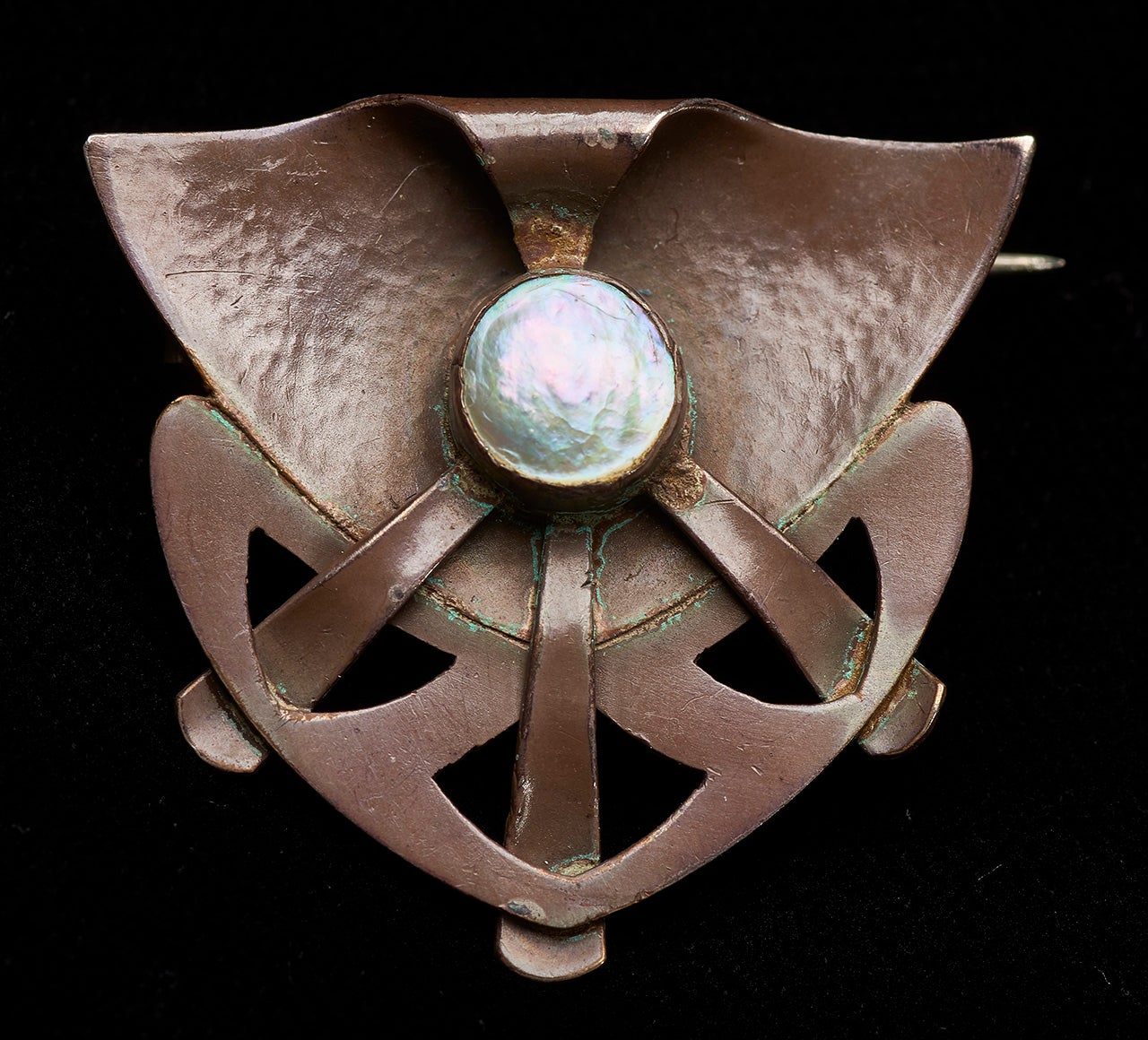
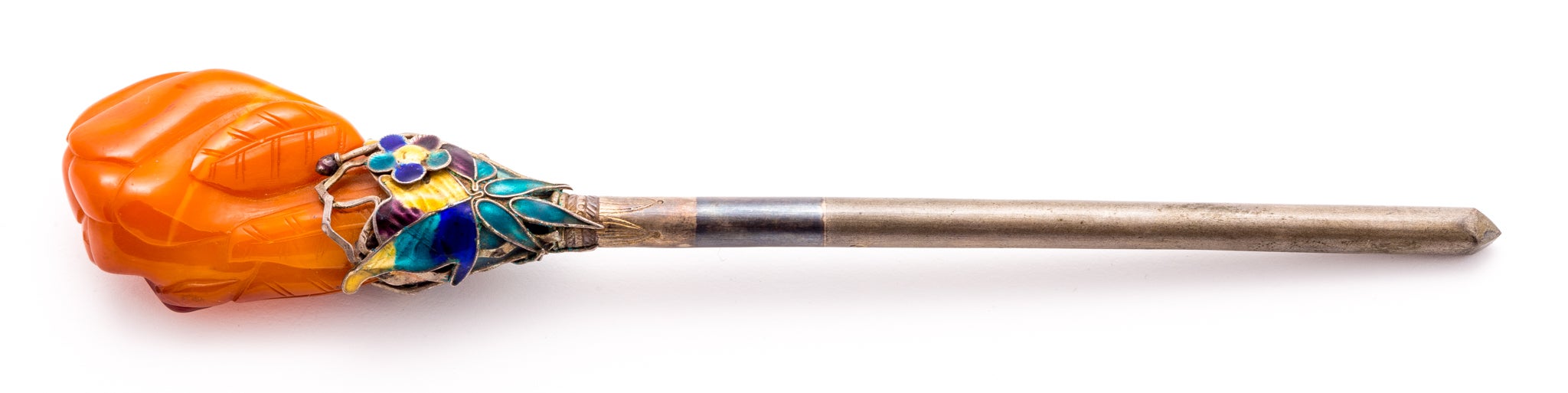
An exhibition of a different sort, Vibrant Embellishments in Stone, Shell & Enamel centers not on a variety of featured stones, but rather how they are presented: shell and enamel in jewelry, functional metalwork and hollowware set in silver, copper, and gold. To be admired are the variety of ways in which the ornamentations are carved or cut, polished, and set.
Long before the Industrial Revolution, stone was cut, chipped and broken in strategic ways by a lapidary. It was then hand-polished by rubbing the stones together, often with pastes of water, sand or “rotten stone,” a mixture of limestone and silica called tripoli, which is still used today.
The use of glass and enamel has a rich history as well. While beautiful in their own right, glass and enamel were incorporated into metal designs as a way to imitate various gemstones, a cost-effective enhancement.
The majority of objects in this exhibition come from the museum’s extensive metals collection, including the Murray Warner Collection of Oriental Art, the Margo Grant Walsh Twentieth Century Silver and Metalwork Collection, and the Collection of Hattie Mae Nixon. Other pieces are on loan from an anonymous lender. They were created in the early- to mid-20th century by makers from all over the world, including China, Denmark, Germany, Great Britain, Indonesia, Italy, Korea, Mexico, the Navajo Nation, Scotland, South Africa, and the United States.
This exhibition is curated by Kendra Roberts, an artist, curator, and founder of Common Ground Arts, an arts consultancy based in Portland, OR. She also currently serves as Director of Blackfish Gallery, Portland’s longest running artist owned/operated gallery, and as President of the Portland Art Dealers’ Association. Roberts is a lapidary and master metalsmith, who received her BA in fine art from Depauw University and her Master of Design in silversmithing and jewelry design from the Glasgow School of Art in Scotland.